Technology companies are seeing an opportunity to better work on the diversity issue in an environment steered by innovation
March 2021
Recently, I shared with a friend some news links about the construction of an Apple campus in Atlanta and Microsoft’s investments in a new space in the capital of Georgia. If before in my elevator speech I would highlight the city that I am living in for its racial diversity, music, being the headquarters of companies like Coca-Cola and Delta Airlines, having the busiest airport in the world and being an exponent of talent with Georgia Tech University, now with Apple and Airbnb arriving and Microsoft expanding, I have added a few more seconds to my speech.
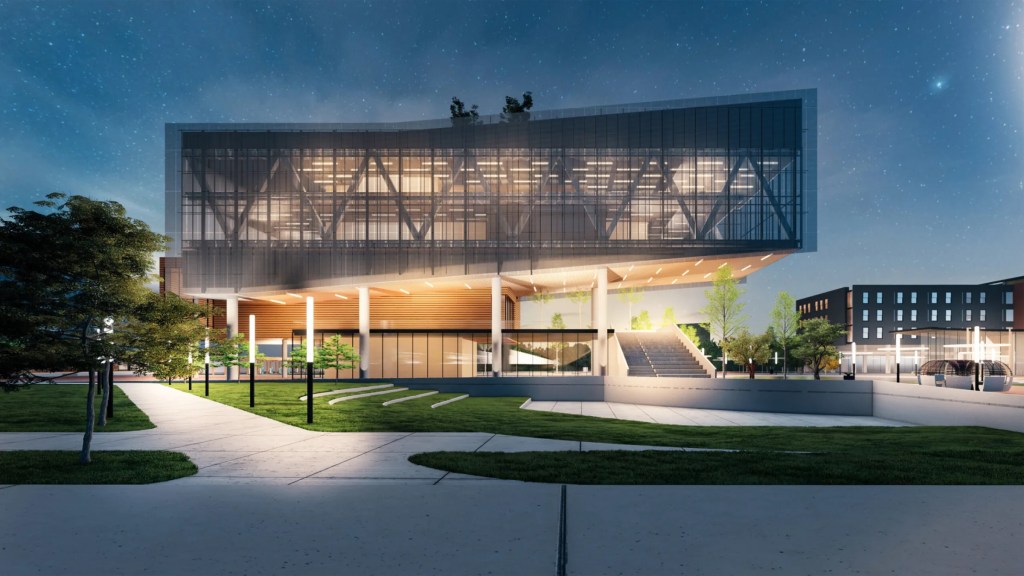
In Apple’s case, the company is investing in a partnership with the HBCUs (Historically Black Colleges and Universities) in Atlanta, to build a global innovation hub, with a place that will include a robust digital platform for students. The initiative is part of Apple’s $ 100 million pledge to help break down systemic barriers to opportunities by offering training. The educational center will open at the historic Atlanta University Center later this year.
Microsoft is already increasing its presence in the region with a new data center and a 90-hectare site to house a future campus. The company estimates that within the upcoming months, the region will shelter around 2,5K employees and the investments will put Atlanta on the path to becoming one of Microsoft’s biggest hubs in the United States in the next decade, after Puget Sound (Seattle) and Silicon Valley (California).
More recently, at the end of February, it was Airbnb’s turn to announce the opening of an office in the city to be a house for employees in technical and non-technical positions. This will be one of the company’s 17 facilities in the USA. For strategic reasons, when a company decides to move, invest in one campus or in a particular urban center, it generally takes into account three factors: talent, infrastructure, and tax rates. These are applicable for companies in all segments, but why then did the tech giants have announced their plans for Atlanta in 2021? Below I list some reasons:
Talents
Corporate America has realized that for the sake of its business, it needs to diversify. Historically, the state of Georgia has been marked by the legacy of the civil war and Atlanta is the city where Martin Luther King Jr, one of the main representatives for the civil rights movement, was born. And in fact, the black community is very representative here.
According to the 2019 United States census, the city has 51% of its population of Black people. Still, according to a 2016 study by the Brookings Institute, four times as many Black people work in the technology sector in Atlanta compared to San Francisco.
Whether to revise a historical gap in terms of equal opportunities for all, we see companies intending to repair this failure not only by offering jobs but in fact, expanding in education and training fields, so that Black people can actually have the same chances in the recruitment processes. Apple, for example, highlights in its most recent diversity report that in 2019, 53% of new hires were from people, who are part of the historically underrepresented groups in the U.S., including Black and also Hispanics. Microsoft, on the other hand, reported in October 2020, that Black or African-American employees represent only 4.9% of its workforce in the United States. There is a huge room to be filled up.
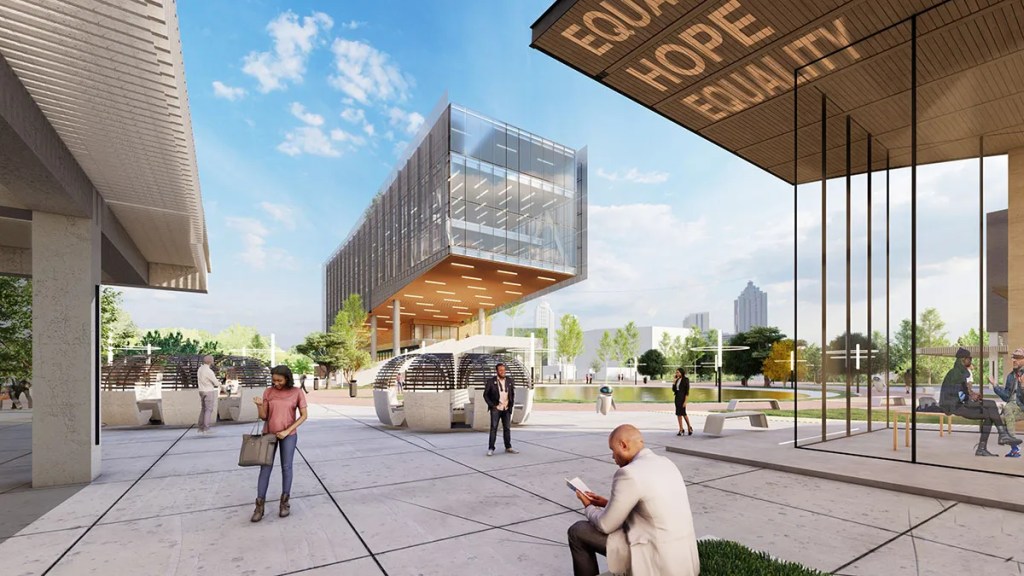
In Airbnb’s case, the announcement was followed by a statement where Laphonza Butler, the company’s director of public policy, explained that Airbnb wants to increase underrepresented minorities to 20% of its US workforce by 2025, against 12% at the moment. The company said that the idea is to work with HBCUs (Historically Black Universities), some incubators and existing programs in Atlanta to solidify the pipeline of opportunities.
And since education is important, Atlanta is supplied with excellent education centers such as Georgia Tech, in engineering and technology, the HBCUs and Emory University. Just to give you an idea, about 4,700 engineers graduate from Georgia’s universities each year. For instance, the Emory Vaccine Center is known for being one of the world’s largest university-based vaccine exploration companies.
However, when we talk about attracting talent, we should consider the atmosphere that they will find in this city and here comes a second argument.
Infrastructure
A friendly city, good weather and lower living costs compared to other big centers. In addition, Atlanta is an option on the East Coast for companies that constantly need to fly their employees to Europe or other parts of the world at a faster pace than the West Coast and cheaper than cities like Boston and New York. Like New York, Atlanta looks like a city under construction, but instead of scaffoldings helping to repair building facades, we are seeing totally new construction, literally emerging out of the ground everywhere. This shows that the real estate market is preparing for high demand in the coming years.
Along with civil construction development, the interest in urban art is growing. It is easy to find panels and murals around the city, many signed by the New Yorker artist, Greg Mike, who is currently based in Atlanta with his ABV Agency + Gallery, a creative studio and center for innovators. Other forms of expression such as music with hip-hop and rap, have also gained a lot of notoriety in recent years and attract several artists.
Undoubtedly the cultural flourishing of a city shows how progressive the locals are, and it was one of the reasons named by Airbnb in its statement, highlighting Atlanta as a city with a robust and curious creative culture, attracting a large community of creators.
Taxes
With an offer of incentives ranging from the tax credit, job stimulus creation, and a series of other credits to invest in R&D (Research and Development), Atlanta and the state of Georgia have created a program specifically for companies that somehow are related to tech. Georgia exempts sales and uses taxes on a wide range of expenses that companies have when settling in or renewing their facilities, including investments in machines, tools, molds, energy, and many others.
For data centers and high-tech companies, the state offers options for them to qualify for sales and use the tax exemptions for some expenses that include equipment, computers, emergency backup generators, air handling units, cooling towers, energy storage or energy efficiency technology, and more. You can tell that there is a whole effort and commitment from the local government to receive these companies.
Whether for the diversity or for the combination of all the factors, a new ecosystem is being developed in the region and the technology companies know this. Innovation doesn’t happen by chance, it thrives in an environment worked and developed for that so that everyone can benefit from it.
Portuguese version at Update or Die.
 BEATRIZ LORENTE
Leave a comment